
What Is DTF Printing? Explained Simply

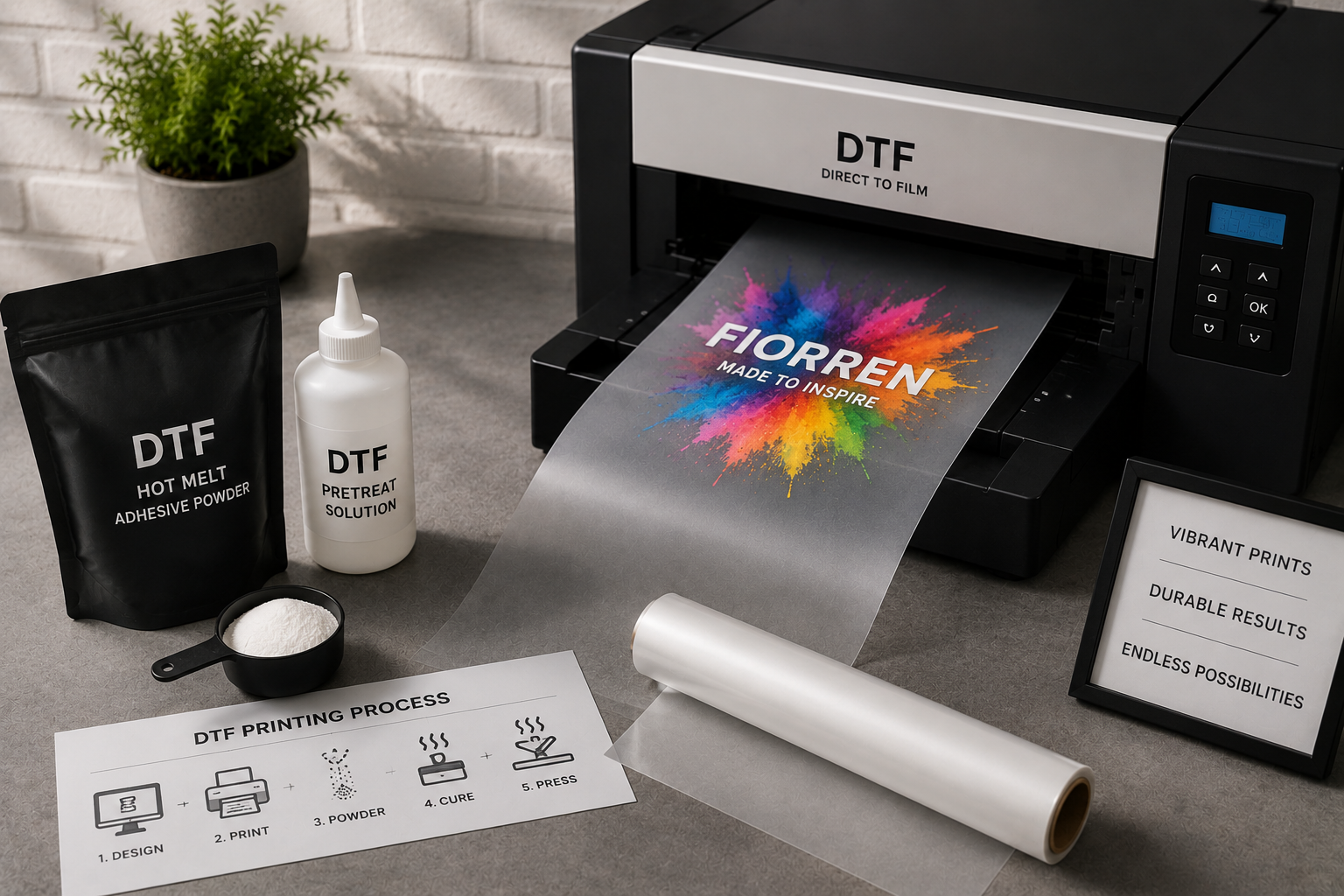
If you’ve used our Custom Studio, you’ve probably seen the letters DTF next to your design. Here’s what it actually means, how it compares to other print methods, and why it holds up so well.
What DTF actually means
DTF stands for direct-to-film. Your design gets printed onto a special film first, then heat-pressed onto the garment. Colours come out sharp and layered, even with detailed artwork, gradients, or multiple colours in one design.
DTF vs screen printing vs DTG
Screen printing is cheaper at high volume but expensive to set up for a single shirt, since each colour needs its own screen. DTG (direct-to-garment) prints straight onto the fabric and works well for small orders, but can fade faster on darker garments. DTF sits in between, strong colour on any fabric colour, no minimum order, and a print that holds up through regular washing.
Why it holds up so well
A DTF print sits on top of the fabric rather than soaking into it, so it keeps its colour and edges crisp after repeated washing. Turn the garment inside out, wash cold, skip the bleach, and it stays looking new for a long time, unlike some vinyl prints that crack or peel after a few months.
Why we use it
Every Custom Studio order at Fiorren goes through DTF, whether it’s a front print, a back print, or both. If you want the full walkthrough, see our guide on how to design your own custom hoodie or t-shirt. It works just as well on our heavyweight tees, hoodies, and sweatshirts, so the finish stays consistent no matter what you choose.
Getting the best result
For the sharpest print, upload artwork at 300 DPI or higher with a transparent background. Blurry files print blurry, no matter how good the press is. Our print size runs up to 14 inches wide, plenty of room for most designs.
FAQs
Does DTF printing crack or peel?
Not if it’s cared for properly. Wash cold, turn the garment inside out, and skip the bleach, and a DTF print keeps its colour and edges crisp for a long time.
Is DTF or DTG better for custom shirts?
DTG can fade faster on darker garments, while DTF holds strong colour on any fabric colour with no minimum order size, which is why we use it across every Custom Studio order.
How do I care for a DTF-printed garment?
Wash cold and inside out, and avoid bleach or high heat drying to keep the print looking new.
Try it yourself
Ready to see it for yourself? Head to Custom Studio and design your own T-shirt, hoodie, or sweatshirt. Prefer to compare your options first? Read where to get custom shirts made in the UK. Every order is checked by our team before it goes to print.

2 thoughts on “What Is DTF Printing? Explained Simply”